
Доступность запасных частей 221-529: Комплексный отчет о снабжении
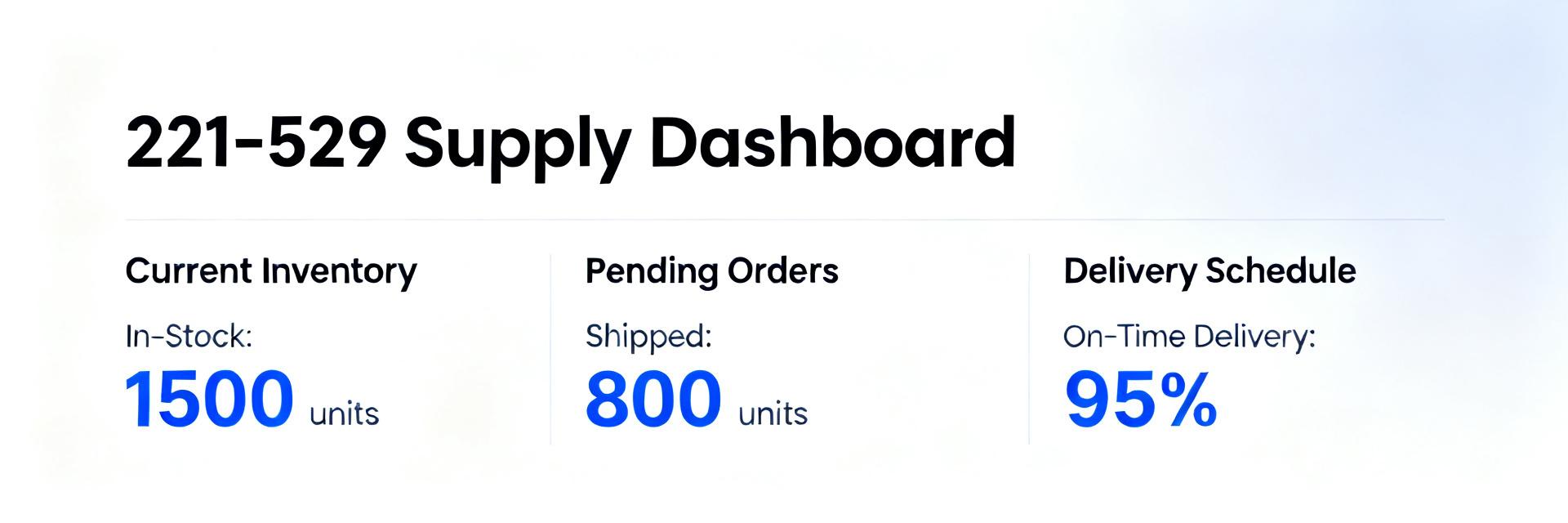
Recent monitoring across major US distributors and maintenance networks shows heightened variability in parts availability for the 221-529 family, with intermittent stockouts and extended lead times. Data feeds from distributor inventories, MRP snapshots, and field reports indicate supply deterioration that is now materially affecting maintenance windows and scheduled project milestones.
1 — Background: What the 221-529 part family is and why availability matters
1.1 — Definition & common applications
The 221-529 part family comprises mid-sized electromechanical modules used in industrial controls, HVAC actuators, and fleet telematics enclosures. Typical form-factors include modular plug assemblies and sealed relay housings. These parts are embedded in assets with scheduled maintenance cycles, directly influencing mean time to repair (MTTR).
1.2 — Historical availability patterns and recent shifts
Historically, baseline availability for 221-529 skus tracked distributor fill rates near 85–92%. Recent months show recurring fill-rate declines and isolated obsolescence flags. Drivers include component-level shortages and extended vendor lead times that raise replacement risk for fielded assets.
2 — Data analysis: Current national supply snapshot for 221-529
2.1 — Key metrics to report (KPIs)
Core KPIs include SKU fill rate, days-of-supply (DOS), and average lead time. Standardized definitions enable consistent comparisons across regions and suppliers.
| Metric | Calculation | Data Source |
|---|---|---|
| SKU fill rate | Shipped ÷ Ordered (30d) | Distributor API, ERP |
| DOS | On-hand ÷ Avg daily usage | ERP, Field reports |
| Avg lead time | Order date → Receipt date | Supplier confirmations |
| On-order fill % | Confirmed qty ÷ Requested qty | PO system |
3 — Regional & supplier breakdown (US-focused)
Regional availability varies by warehouse proximity and transit times. East coast nodes show fast replenishment, while West and Gulf ports face episodic transit delays and rail congestion. Segmenting data by region allows targeted safety stock placement.
4 — How to audit parts availability
A rapid audit follows a concise checklist: pull inventory data, perform physical verification, validate supplier lead times, and check alternates. Required fields include SKU, on-hand, allocated, DOS, and primary supplier. For critical SKUs, audit frequency should be weekly.
5 — Case studies
Case A: An organization experienced downtime when multiple SKUs hit backorder. Root cause was single-source component obsolescence. Lesson: Maintain inventory buffers and consignment agreements.
Case B: A team reduced lead time by qualifying pre-approved alternates and leveraging multiple authorized vendors. Multi-source strategies improved resilience against future shortages.
6 — Action plan: Procurement recommendations
Immediate (0–30 days): Prioritize critical SKUs, confirm lead times, and secure bridging inventory via risk-based orders.
Medium-term (1–12 months): Center on multi-sourcing, recalibrated safety stock, and alternate approvals to increase interchangeability.
Executive Summary
- Parts availability for 221-529 shows elevated risk; prioritize rapid audits to protect maintenance windows.
- Top regional risks include port congestion; use regional DOS analytics to guide stock redistribution.
- Next steps: Focused audit, prioritized orders for low-band SKUs, and accelerated multi-source qualification.
Common questions and answers
How should teams measure parts availability for 221-529 during an audit?
Measure parts availability by tracking SKU fill rate (30-day shipped ÷ ordered), DOS (on-hand ÷ avg daily usage), and average supplier lead time. Combine distributor snapshots with ERP committed balances and field counts to produce a reliable baseline.
What immediate sourcing tactics stabilize 221-529 supply?
Immediate tactics include placing prioritized risk-based purchase orders, requesting confirmed lead-time commitments, activating consignment programs, and negotiating short-term volume allocations to bridge the gap.
When should engineering pursue redesign or alternate qualification for 221-529 parts?
Engineering should pursue redesign when supplier concentration exceeds risk thresholds, when lead times consistently exceed 12 weeks, or when obsolescence notices appear. Use an accelerated qualification checklist to shorten time to approval.
Which US regions face the highest 221-529 supply risk?
The West and Gulf regions face higher risk due to episodic transit delays and rail congestion. East coast and Midwest nodes currently maintain better replenishment rates for stocked electromechanical modules.