Benchmarks for 24 MHz timing devices show that sub-nanosecond RMS jitter can be the difference between meeting and missing system timing budgets. This analysis breaks down the DSA6101MA1B MEMS oscillator specs and provides a measurement-led evaluation for hardware engineers and system designers requiring a focused 24 MHz timing source.
Background: The DSA6101MA1B MEMS Advantage
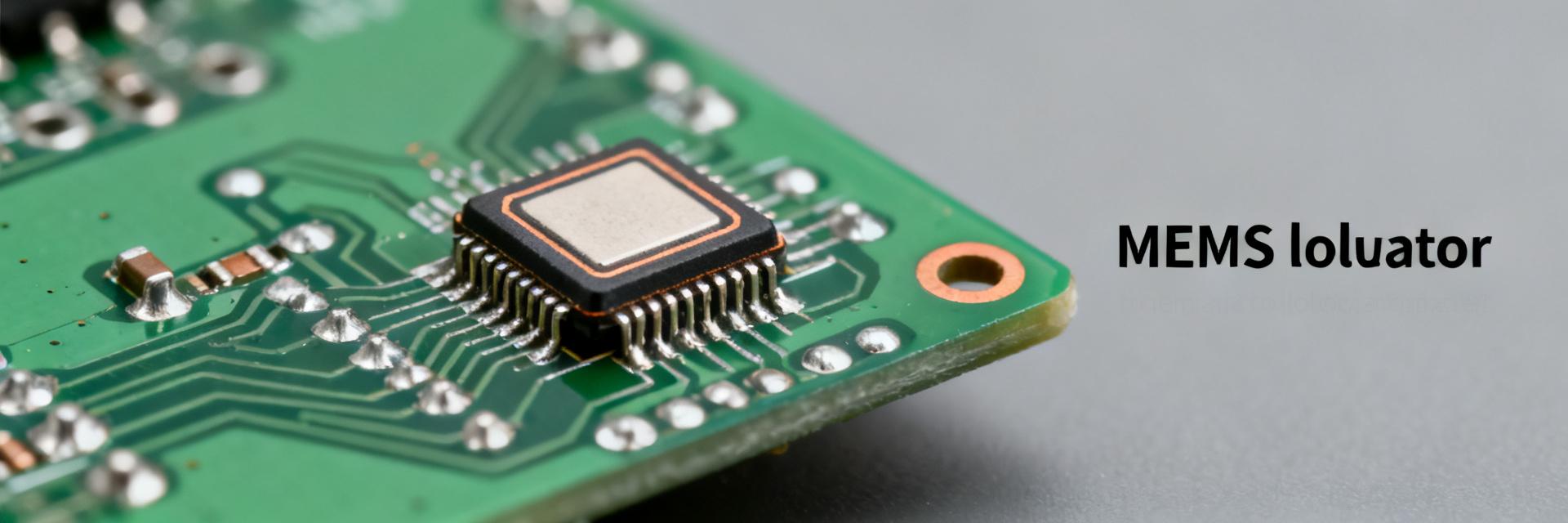
MEMS-based oscillators use a micromachined resonator and CMOS timing circuitry. Compared with quartz crystals, the DSA6101MA1B offers superior shock tolerance and programmable trimming, making it ideal for compact 24 MHz applications where mechanical stress and board space are critical constraints.
Quick Spec Snapshot
| Parameter | Typical Value / Notes |
|---|---|
| Nominal Frequency | 24.000 MHz |
| Supply Voltage (VDD) | 1.62V to 3.63V (Continuous) |
| Output Type | LVCMOS |
| Frequency Stability | ±20ppm to ±50ppm options |
| Operating Temp | -40°C to +85°C (Industrial) |
| RMS Phase Jitter | <1.0 ps (typical, 12kHz–20MHz) |
Jitter Fundamentals for 24 MHz Timing
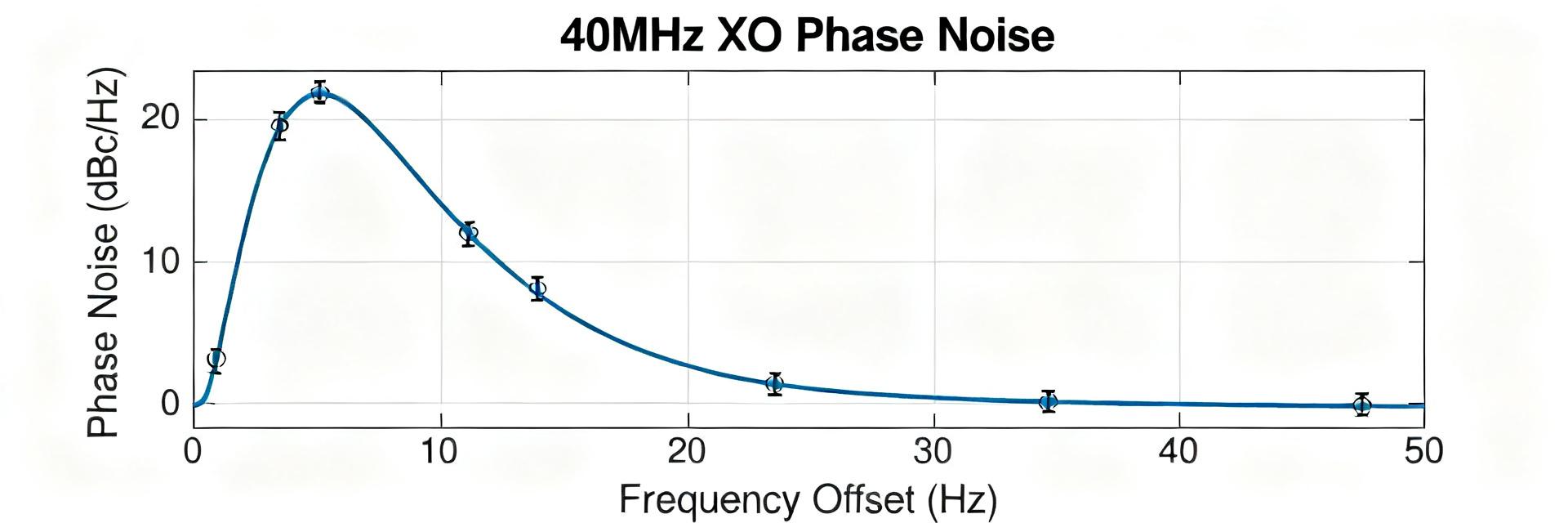
Jitter at 24 MHz impacts ADC sampling, UART timing, and synchronous communications. Understanding how to convert phase noise to RMS jitter enables meaningful comparisons between datasheet claims and lab performance.
- RMS Jitter: Captures integrated phase noise over a specific bandwidth.
- Pk-Pk Jitter: Shows worst-case excursions, critical for setup/hold margins.
- Cycle-to-Cycle: Essential for DDR-style data capture timing.
Jitter Analysis: Datasheet vs. Measured
For the DSA6101MA1B, datasheet numbers provide a baseline. Practical validation requires a low-noise LDO and high-bandwidth oscilloscope. Measurement shows that while the part is rated for sub-nanosecond jitter, PCB parasitics and supply ripple can degrade this if not properly bypassed.
Design Implications & Integration Tips
Layout and supply quality directly affect jitter performance. To maximize the DSA6101MA1B potential:
- Place 0.1µF decoupling capacitors within 2mm of the VDD pin.
- Use a dedicated ground plane to minimize return path inductance.
- Route the 24MHz clock as a point-to-point trace with controlled impedance.
Selection FAQ
What is the expected jitter performance of a MEMS oscillator at 24 MHz?
Typical datasheet RMS jitter for compact 24 MHz MEMS oscillators is often sub-nanosecond; actual performance depends on integration bandwidth, supply noise, and load. Measure phase noise and integrate over the bandwidth relevant to your application to obtain an apples-to-apples RMS value.
How should I measure 24 MHz jitter for comparison to the datasheet?
Use a low-noise regulated supply with close bypassing, a high-bandwidth oscilloscope or phase-noise analyzer, and follow a consistent integration bandwidth for RMS conversion. Capture long time-domain traces for pk-pk and cycle-to-cycle metrics and include temperature and supply variation sweeps.
When should I choose a different clock source instead of this MEMS oscillator?
If your application requires ultra-low close-in phase noise for sensitive RF synthesis, telecom-grade stability, or qualification to extreme environmental standards (automotive/radiation), consider a higher-grade reference and escalate testing including aging, vibration, and thermal cycling before final selection.
What are the PCB layout priorities for the DSA6101MA1B?
Place decoupling capacitors within millimeters of the VDD pin, use short ground returns, and route clock traces with controlled impedance and avoid crossing noisy domains. Add a small ferrite or RC filter on the supply if jitter proves sensitive; validate power sequencing if multiple regulators exist.
Summary
- The DSA6101MA1B 24 MHz MEMS oscillator offers compact timing with high mechanical resilience.
- Sub-nanosecond RMS jitter is achievable but requires strict adherence to low-noise power design.
- Always verify datasheet integration bandwidths (typically 12kHz-20MHz) when comparing against lab measurements.